

- HOME
- Goma Fire Ritual Experience

Goma Fire Ritual Experience
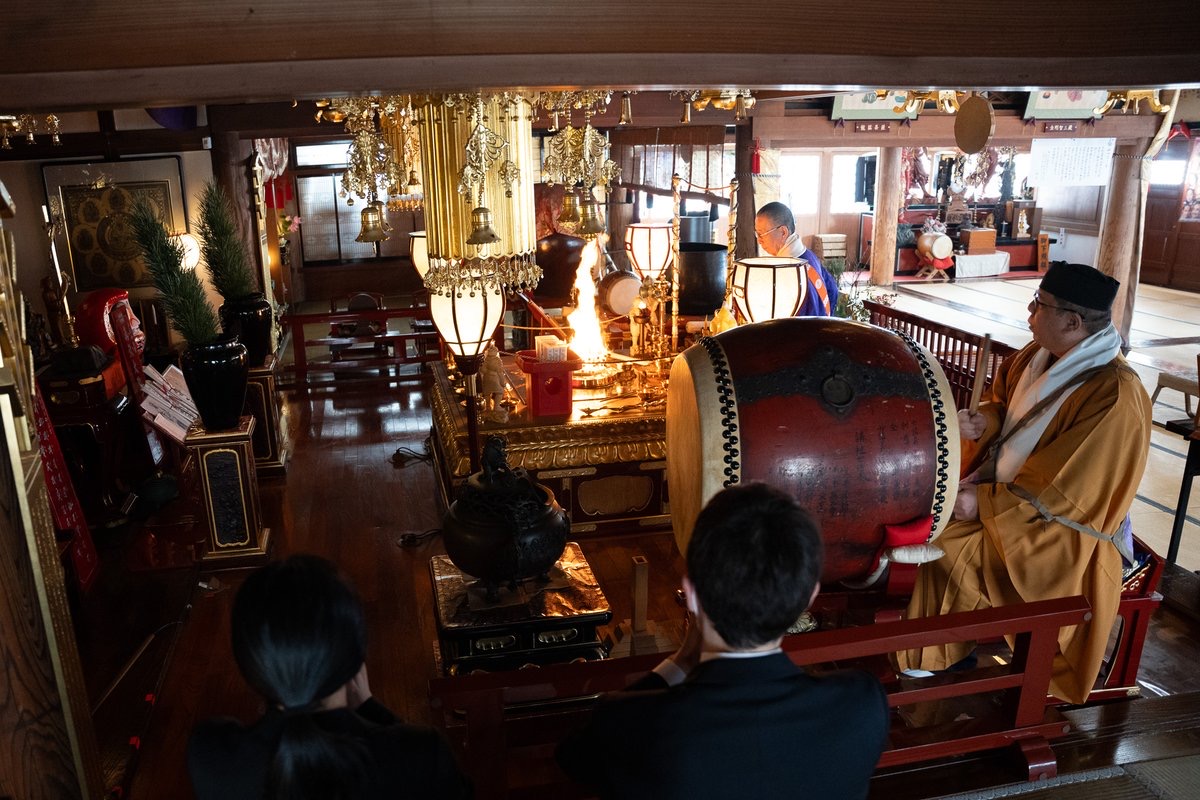
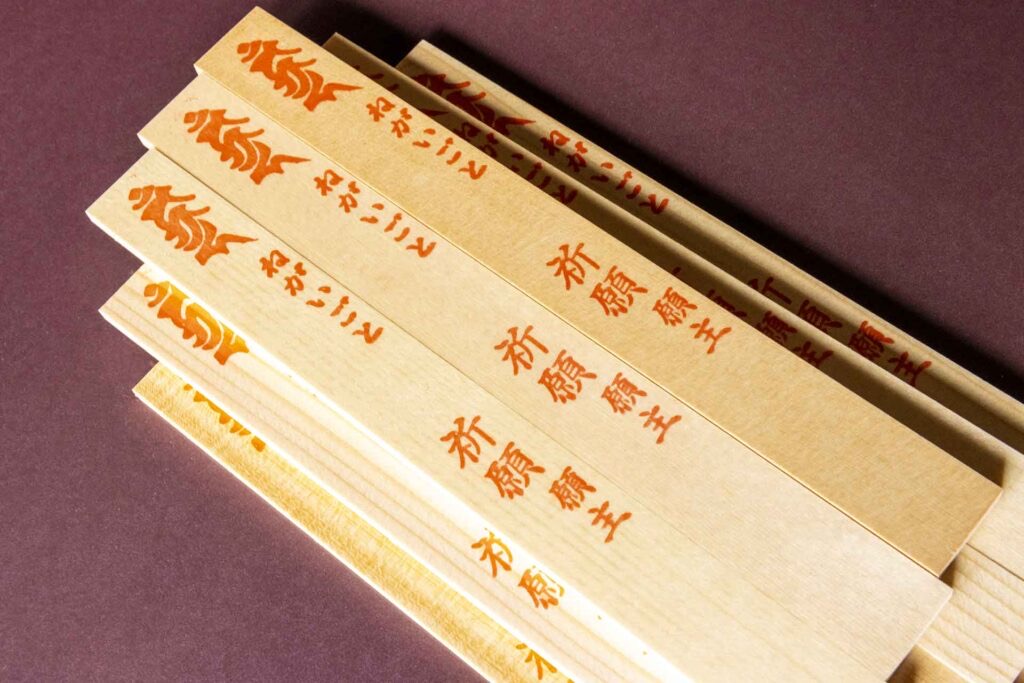
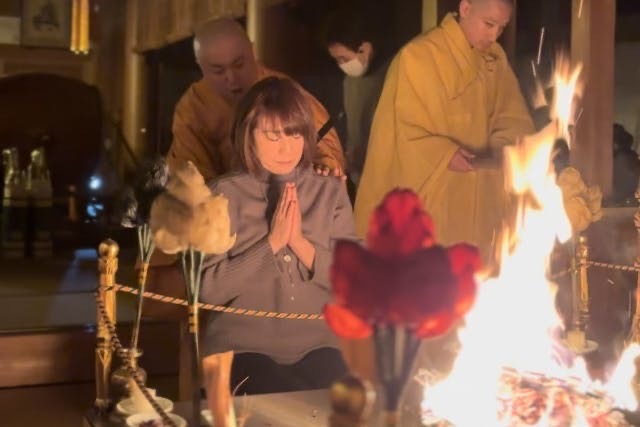
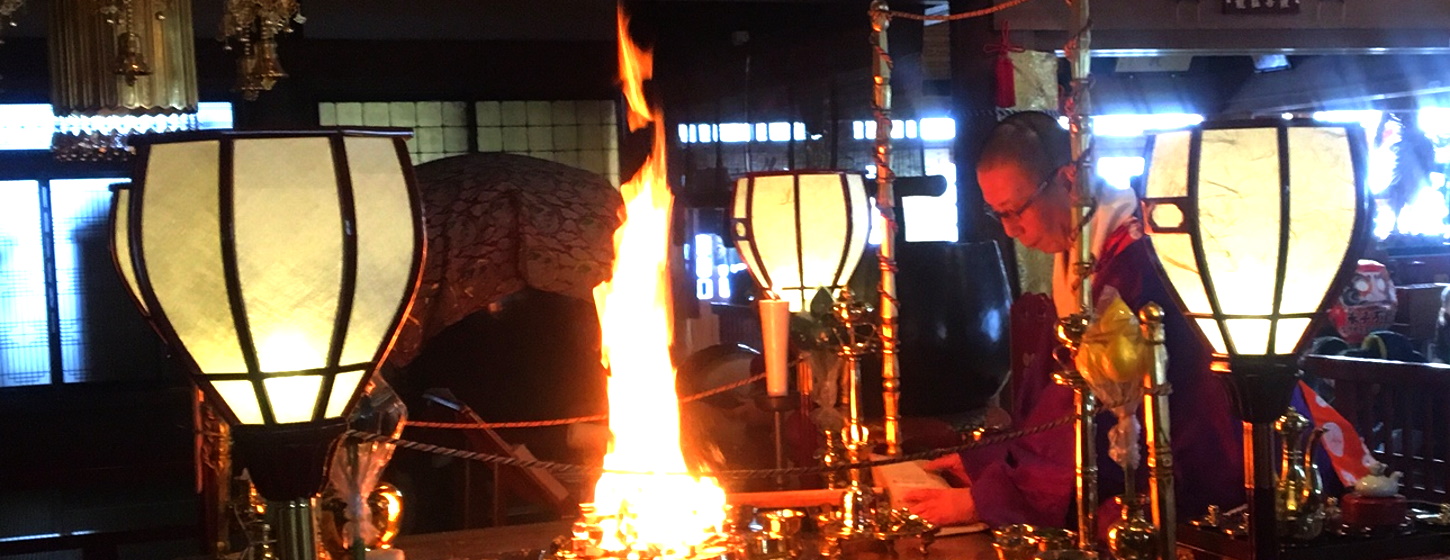
At Yonako Takizan Fudo-ji Temple, the goma fire ritual, a central part of the faith, is held in the main hall at 11:00 AM on the 1st and 15th of each month. Worshippers write their wishes on special wooden tablets called gomagi and burn them in the sacred fire lit in front of the statue of Fudo. It is believed that this fire will directly deliver the written wishes to the statue and resolve the believers’ worries. Anyone can participate in this goma fire ritual, which has granted wishes for many people since ancient times. During the goma fire ritual, a ritual called “blessing of one’s belongings” is also held. In this ritual, monks pass worshippers’ belongings through the fire to receive the blessings of Fudo-son. As a memento of your visit to Japan, why not participate in the goma fire ritual and inscribe your wish on a gomagi stick, which brings hope for the future? You will also have the special opportunity to sit alongside the goma fire ritual.
What is Goma?
Shingon Esoteric Buddhism
Shingon Esoteric Buddhism is a Buddhist teaching that was introduced to Japan from Tang China by Kobo Daishi Kukai in the early Heian period. This teaching is a “secret Buddhism” that demonstrates truths that cannot be conveyed in words through practice, and preaches “sokushin jōbutsu,” or attaining Buddhahood while still alive.
Origin of Shingon Esoteric Buddhism
Shingon Esoteric Buddhism is a sect founded by Kukai, who traveled to Tang China as a Japanese envoy, received teachings from the Eighth Patriarch of Esoteric Buddhism, and founded it upon his return to Japan. Shingon Buddhism is a religious organization that adheres to the teachings of Shingon Esoteric Buddhism.
Difference between Esoteric Buddhism and Exoteric Buddhism
There are two types of Buddhism: Exoteric Buddhism and Esoteric Buddhism.
Exoteric Buddhism: Teachings that reveal truths through words that are easy for anyone to understand.
Esoteric Buddhism: Teachings that demonstrate truths that cannot be fully expressed in words through practice and action.
Teachings of Shingon Esoteric Buddhism
- Instantaneous Enlightenment
Shingon Esoteric Buddhism teaches that attaining Buddhahood while still alive is possible, known as instantaneous enlightenment. This is based on the belief that all people possess the potential to attain Buddhahood. - Three Mikkyo Kaji
The training required to attain instantaneous enlightenment is called the “Three Mikkyo Kaji.”
Physical: Making mudras with the hands
Oral: Chanting mantras
Intentional: Contemplating the state of Buddhahood in the mind
The world of enlightenment is believed to emerge when these three actions are united with Buddhahood. - Affirmation of Desire
Shingon Esoteric Buddhism does not deny human emotions such as desire and anger; rather, it directly affirms their existence. It teaches that denying these emotions is like seeking water outside the waves.
Shingon Esoteric Buddhism Training
Shingon Esoteric Buddhism sometimes seeks worldly benefits through magical rituals such as goma. Mandalas and esoteric ritual implements are also important elements.
About Goma
Acala’s goma is a type of goma prayer, a secret ritual of Shingon Buddhism. A goma stick is lit on a goma altar dedicated to Acala, and prayers are made for the fulfillment of wishes. The blazing flames are considered a symbol of Acala’s wisdom, and are believed to burn away worldly desires and send wishes to heaven.
Origin and Purpose of Goma
Goma originates from the ancient Indian ritual of “goma,” a Buddhist practice that worships fire as a deity, wards off evil spirits, and prays for divine protection. Acala’s goma is said to burn away worldly desires and pray for blessings such as wish fulfillment, good fortune, protection from misfortune, and traffic safety.
How to Perform Goma Prayer
Goma prayer is held at many temples. Typically, a prayer is written on a goma stick at the reception desk and a goma fee is paid. In the main hall, monks light a fire on the goma altar and, while chanting sutras, throw goma wood and offerings into the flames. After the prayer, a goma charm is presented and placed in a home or other location.
About Goma fire
Goma fire is a Buddhist esoteric ritual using fire. It has the spiritual significance of burning away worldly desires, purifying the mind and body, and fulfilling wishes. By burning a goma stick with a wish written on it, it is believed that one will receive the protection of the gods and Buddhas.
Spiritual Meaning of Goma Fire
Goma fire has the following spiritual significance:
- Symbol of purification and rebirth
- Support for wish fulfillment
- Support for inner peace and meditation
- Removal of negative energy
- Symbol of gratitude and offering
- Connection with the universe
Purpose of Goma Fire
Goma fires are primarily performed for the following purposes:
- Avoiding evil spirits and warding off evil spirits
- Exorcising and purifying spirits
- Fulfilling prayers
- Memorial service
How is goma performed?
A goma fire ritual typically follows the following steps:
- Preparing the Goma Altar
The worshipper’s wish and name are written on a goma stick, which is then placed on the goma altar. - Prayers and Sutra Chanting
The monks begin the prayer, throwing goma wood into the fire and chanting mantras and sutras.
Purification through the Power of Fire: As the goma wood burns, the energy of the fire purifies evil spirits and evil energy. - Worshipper Participation
As worshippers burn the goma wood, they silently pray for their wishes.
Expected Benefits of Goma Fire
Participating in a goma fire can be expected to have the following benefits:
- Purification of mind and body
- Removal of negative emotions
- Improved concentration
- Change in vibrations

Yonako Takizan Fudo-ji Temple, thanks to the miraculous power of its principal image, Acala, has attracted the faith of warlords such as Uesugi Kenshin, who was revered as a war god during the Sengoku period, and Sanada Nobushige (Yukimura), who was hailed as Japan’s greatest soldier. No matter where in the world you live, Acala will protect those who pray to it and guide them to the right path. Please come and pray at the temple and participate in the goma fire ritual. We look forward to your visit.
Fee
10000 yen per person at a time
※Please cancel at least 3 days in advance.
※If you are not feeling well on the day of the meditation, we advise against performing it. In that case call us.
Booking
Book via phone call
026-245-0972
Reception time:9 am-5pm
Book by email
You can submit the form below.